Morocco is a land where tradition is part of everyday life. From spiritual music and tribal festivals to lavish weddings and legendary hospitality, every custom tells a story of heritage passed down through generations. This cultural wealth makes Morocco an authentic and vibrant destination, deeply rooted in its ancestral values.
🎉 Traditional Festivals and Moussems
Moroccan moussems are lively public gatherings that combine spirituality, folklore, and community spirit. Often dedicated to a local saint or linked to an agricultural season, they offer a unique opportunity to witness Morocco’s living traditions.
- Rose Festival in El-Kelaâ M’Gouna: Every May in the Dades Valley, locals celebrate the rose harvest with parades, traditional dances, and the election of a Rose Queen. A true feast for the senses.
- Gnaoua Festival in Essaouira: A world-renowned event blending sacred Gnaoua music with jazz and global sounds. It highlights the African roots of southern Morocco in a festive, spiritual atmosphere.
- Mawazine Festival in Rabat: One of Africa’s biggest music festivals, featuring international stars and Moroccan artists on the same stage.
- Imilchil Marriage Moussem: In a remote Berber village in the High Atlas, nomadic tribes gather annually to celebrate traditional weddings—a rare window into Amazigh social life.
- Fantasia (Tbourida): An impressive equestrian performance where horsemen dressed in traditional attire fire black powder rifles in perfect unison—a display of bravery and tribal honor.
🕌 Religious Rituals and Spiritual Practices
Islam is central to daily life in Morocco, shaping many traditional customs and annual celebrations.
- Ramadan: The sacred month of fasting, prayer, and solidarity. At sunset, families gather for iftar to share traditional dishes in a festive atmosphere.
- Eid al-Adha (Aïd el-Kebir): The most important Islamic festival, commemorating Abraham’s sacrifice. Families gather and share a sacrificial meal in a spirit of generosity and unity.
- Sufi Rituals: Brotherhoods such as the Gnaoua practice spiritual ceremonies involving chants and trance-inducing rhythms—a mystical path to soul purification.
👰 Traditional Weddings and Henna Ceremonies
Moroccan weddings are major social events that can last several days, filled with deeply symbolic traditions.
- Hammam Ritual: Before the wedding, the bride visits the hammam with close friends for a ritual purification—a moment of intimacy and beauty preparation.
- Henna Night: A joyous evening when the bride’s hands and feet are decorated with henna motifs symbolizing luck, fertility, and protection. Music and dance accompany the celebration.
- Traditional Dress: The bride wears several elaborately embroidered kaftans and is guided by a neggafa (wedding assistant). The groom typically wears a white djellaba or kaftan.
🍵 Moroccan Mint Tea: The Essence of Hospitality
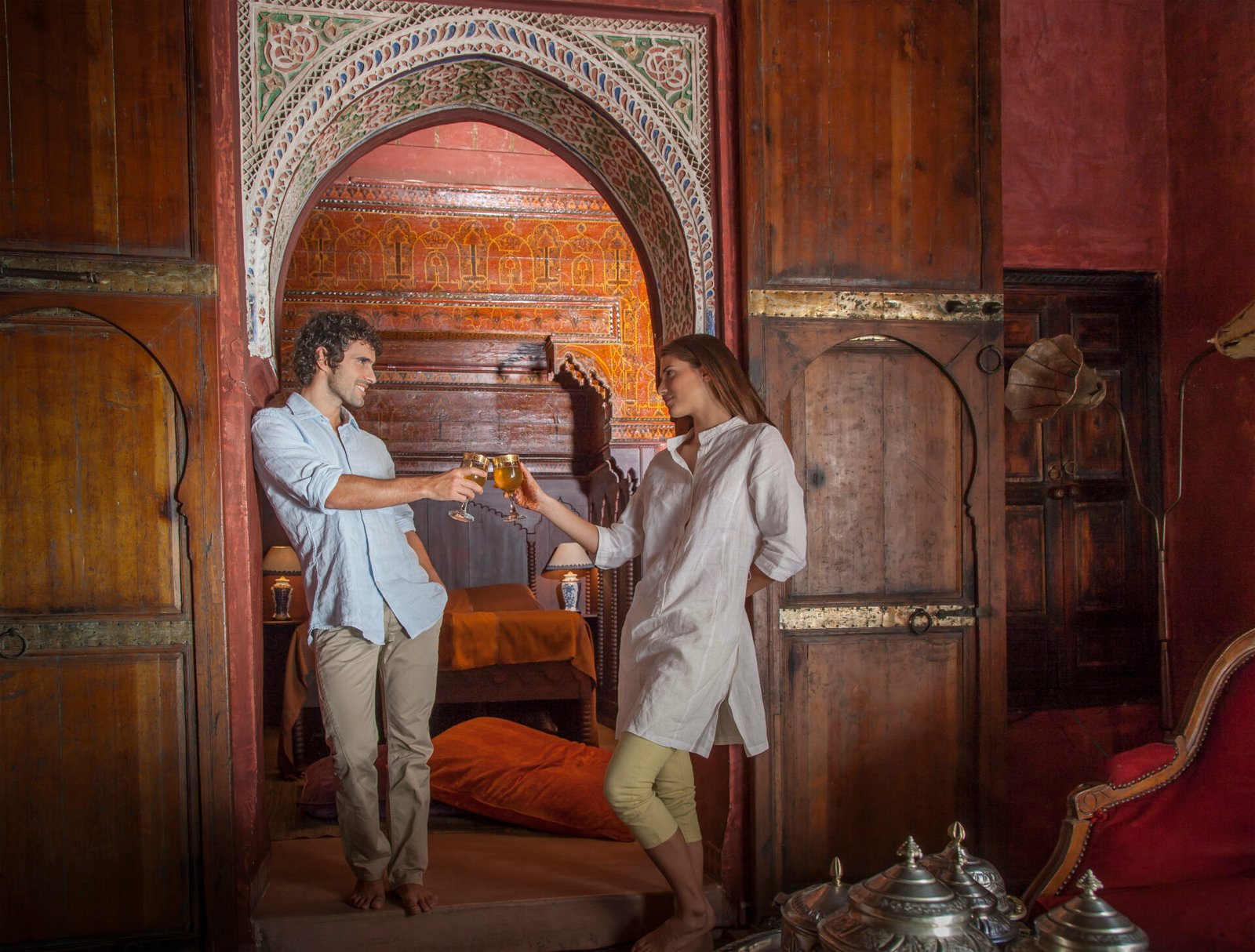
Mint tea is Morocco’s national drink and a true symbol of its hospitality culture.
- Preparation: Green tea is infused with fresh mint and plenty of sugar, then poured from a height to create a delicate foam.
- Symbol of Openness: Offered at every occasion—in homes, souks, or desert tents—tea expresses trust, respect, and friendship.
🧕 Clothing and Craftsmanship
Morocco’s traditional clothing and crafts reflect its regional diversity and artisanal mastery.
- Djellaba and Kaftan: Elegant garments with intricate embroidery, worn in daily life and on festive occasions.
- Craft Heritage: Moroccan artisans excel in zellige mosaics, tadelakt plaster, pottery, metalwork, carpets, and leather goods. Each piece tells a story and is handmade using ancestral techniques.
🛍️ The Souks: Between Tradition and Bargaining
Exploring Moroccan souks is a multisensory journey through culture, commerce, and tradition.
- The Art of Bargaining: Negotiation is part of the shopping experience and reflects mutual respect. Haggling is embedded in Moroccan daily life.
- Typical Handicrafts: Spices, tea glasses, handmade slippers (babouches), argan oil, Berber jewelry, colorful rugs—ideal souvenirs of a rich cultural heritage.
🧭 Why Explore Moroccan Traditions?
Traveling through Morocco means immersing yourself in a world of living traditions. Whether you’re sharing tea with a nomadic family, witnessing a spiritual ceremony, or watching a Fantasia, Morocco’s cultural heritage is a constant presence.
From ancient medinas to the High Atlas, from coastal towns to the starry Sahara skies—every experience reveals the soul of this extraordinary country.
🔗 Useful Links
Discover more authentic travel experiences with Sahara Adventure, your local expert in customized tours and cultural immersion.